The emergence of digital technology has profoundly altered consumer behaviour and the buying journey. With the exponential growth of digital tools, customers now enjoy a wide selection of products with fast delivery times, accompanied by increasingly personalized service. Facing competition from the internet, physical stores face significant challenges, such as falling average basket sizes and declining store footfall. However, digital technology should not be viewed as an adversary to physical retail; on the contrary, it should serve your local marketing strategy by helping you optimise online visibility, generate in-store footfall, and build customer loyalty. This is precisely what drive-to-store is all about, and it is the subject of this article !
| 👉 Article updated in July 2026. |
Pas le temps ? Demandez à l'IA de résumer de l'article :

1. Customer journey and drive-to-store
In recent years, the customer journey has undergone a major transformation due to digital advances and the digitalisation of physical shops. The web is now fully embedded in consumer purchasing habits, making it a strategic lever for boosting store footfall. In fact, 86% of internet users research online before making an in-store purchase1, and 88% consult online reviews before making a decision2.
It has therefore become crucial for brands to be present where their customers are and to adopt a "phygital" approach—meaning developing a strategy that seamlessly integrates both physical and digital elements:
- Digital (websites, online directories, social media) to research products, compare prices, or check reviews.
- Physical (stores, print advertising, events) to discover the brand and test products in real conditions.
Drive-to-store creates genuine synergy between your web presence and your physical points of sale. It is an indispensable strategy, given that today's customer purchasing journey is omnichannel. With drive-to-store, the goal is to leverage all the digital tools at your disposal to boost footfall across your retail outlets. A dedicated drive-to-store solution is therefore essential for executing your strategy.
Remember that your physical point of sale remains a critical touchpoint: it is your greatest asset for convincing consumers and offering them a personalised experience. This omnichannel buying journey mobilises every existing channel between the customer and the seller, requiring merchants to be accessible anywhere, anytime.
👉 Feel free to also read our article "Drive-to-store: key figures" to learn all about the importance of this strategy.
.png?width=730&height=180&name=banniere%20questions%20(2).png)
2. What is drive-to-store?
The concept
By definition, drive-to-store encompasses all marketing actions carried out to generate footfall at a point of sale. Originally, drive-to-store primarily targeted motorists—notably through notifications delivered via platforms such as Waze. Here, we define drive-to-store as any digital initiative designed to attract customers into your shops (a concept also referred to as web-to-store). As you can see, physical and digital channels are no longer in competition; instead, they represent two complementary entities.
As outlined in the first section, consumers can conduct research online and then head in-store to receive tailored advice or try out a product. This phenomenon is known as "ROPO" (Research Online, Purchase Offline). Drive-to-store has thus become a vital driver of local communication strategies, accounting for 66% of retail advertising budgets in France in 2023 (amounting to €74 billion)3.
Usage example
To succeed with this strategy, you must capture prospects' interest online and subsequently ensure their in-store experience is compelling. What does this look like in practice? It could take the form of a promotional SMS sent to your database to highlight a special offer or product. Drawn in by this communication, your customers visit the store. Once the prospect is inside, your merchandising, in-store team, and atmosphere take over to convert that visit into a sale.
You can also deploy geolocalised advertising : these campaigns can be highly effective within a drive-to-store strategy as they allow you to target users based on their specific catchment area. We also recommend utilizing all available communication channels—such as email, RCS, or voice messaging—to cultivate a positive customer experience.
-1.png?width=730&height=180&name=Banni%C3%A8re%20articles%20blog%20(18)-1.png)
3. Which strategies should you implement ?
With the growth of the internet, consumers now have instant access to a wealth of information at the click of a button. This over-informed consumer has developed the habit of researching, comparing, and seeking feedback before buying. In fact, 39% of French consumers begin their buying journey on an online store or a search engine like Google4. An online presence is therefore vital for gaining visibility, helping you increase store footfall and, ultimately, boost your turnover.
Before detailing the various drive-to-store strategies you can implement, remember that the overall shopping experience is paramount for customer retention. It is what keeps customers coming back to physical stores and sets you apart from pure-play e-commerce businesses.
Click & collect
This method enables customers to order and pay for items online before collecting them in-store. It allows consumers to avoid delivery charges, queuing at the till, and out-of-stock disappointments. Feeling more at ease about their purchases, customers are also more inclined to browse other items while in the shop.
Gamification
Promotional campaigns tied to special events—such as a new product or collection launch—are an effective way to encourage store visits. A prime example comes from Burger King. The brand is a major advocate of gamification and has achieved notable success through various activations (driving store footfall, increasing average basket sizes, generating press coverage, and creating social media buzz). One activation offered customers a mystery burger for just €2. For the fast-food chain, the goal was to drive footfall and recruit new customers by encouraging them to discover items across their menu. Through fun experiences, drive-to-store games generate interest in retail brands and their outlets. Built on the enjoyment of "taking a chance," they foster deeper brand attachment as customers eagerly seek to repeat the experience—a key strength of gamification!
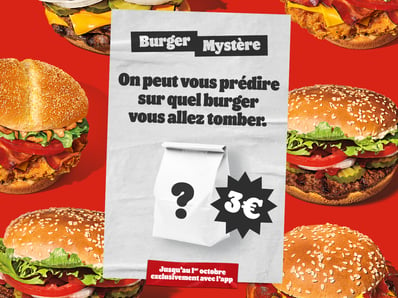
Example: Burger King’s mystery burger, which encourages customers to visit the store.
Social media
Social media allows you to optimise your online visibility while staying in direct touch with consumers. In fact, 87% of consumers state that social media influences their purchasing journey5. Furthermore, it enables you to build engagement and foster a sense of community. For instance, you can use these channels to:
-
Introduce your in-store teams to strengthen personal connections with clients
-
Run interactive activities or competitions to generate store footfall
-
Promote charitable partnerships to highlight your CSR (Corporate Social Responsibility) commitments
-
Turn employees into brand ambassadors, enhancing workforce morale and employer branding
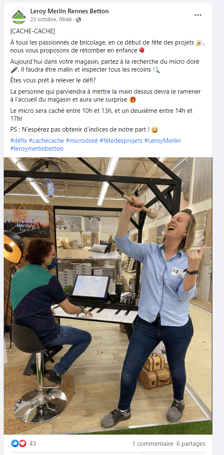
Example of a game organized by Leroy Merlin
Publishing content at a steady, regular pace is strongly recommended to maintain ongoing engagement !
For retail networks and chains, we advise structuring your presence by creating local pages for each store linked directly to the brand's national account—which brings us to our next point…
Store listings
Last but certainly not least: utilizing local store listings is essential for driving footfall. Whether on Facebook or Google Business Profile, optimised local pages are powerful drivers of store visits.
Start by verifying that all listed information is accurate and consistent with your data across the web (website, social channels, online directories).
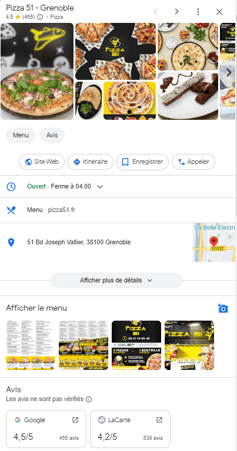
Exemple de fiche Google My Business
You can also use Google Posts to share local store updates and promotions. Not only will the Google algorithm favor this activity, but it also keeps prospective clients informed.
Finally, establish a consistent routine for managing customer reviews: read and respond to feedback whether it is positive or negative, with or without text comments, and aim to reply quickly (ideally within 72 hours). Replying feeds search algorithms to improve your ranking, and more importantly, helps convince prospects who read them: 88% of internet users read online reviews before making a purchasing decision7.
4. Conclusion
Drive-to-store has become an essential component of a modern retail strategy, allowing businesses to communicate with consumers directly on the platforms they use and drive footfall to physical stores. As most brands now leverage this strategy, standing out requires excelling across multiple touchpoints. Maintaining continuity across these contact points ensures the buying journey remains as seamless as possible, making an omnichannel strategy indispensable for your overall brand image.

References :